


University of Southern Mississippi Athletics
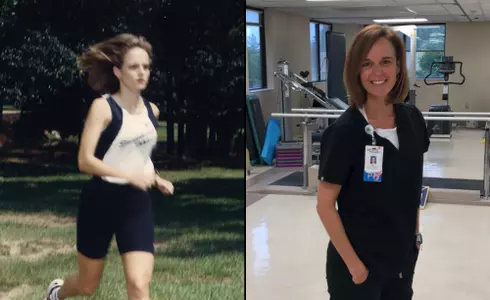
Golden Eagle Alumni in Healthcare Spotlight: Kim Ryder
5/29/2020 1:00:00 PM | Track & Field/Cross Country
HATTIESBURG, Miss. -- Southern Miss Athletics is thankful for healthcare personnel serving on the frontlines of the COVID-19 pandemic. This serves as the fifth installment of features with former student-athletes who are in the medical field. This week's spotlight is on Kim (Curry) Ryder, who lettered in cross country and track (primarily the 1500 and 3000) from 1993-96.
Ryder is a physical therapist at Merit Health Wesley in Hattiesburg. She grew up in a military family, but considers Jacksonville, Fla., her hometown, and spent her freshman year at Appalachian State. Ryder earned 1996 NCAA Woman of the Year distinction for Mississippi and had the privilege to attend the awards dinner in Kansas City. The emcee for that event was current Good Morning America anchor Robin Roberts, formerly of WDAM and ESPN.
What are your daily responsibilities?
"Before COVID hit, I was primarily in our outpatient physical therapy clinic. People may have orthopedic injuries, strokes, spinal cords and things of that sort. Once the COVID crisis came, we had to close it and I was in the hospital and visiting rooms. We also have a 24-bed transitional care unit. We had to work with all those people. Going to the rooms or upstairs, we'd have a little gym and take patients out. For those who are super sick and unable to get themselves out of bed or walk down the hallway, we wanted to increase their functional ability. Transitional care was for people who couldn't go home and needed more advanced, aggressive therapy who we'd work with longer. Most of my day is getting people their functional ability as much as possible so they can go home and get some normalcy."
How has COVID-19 affected your daily routines?
"I've never had to wear a mask for an extended period of time. Going into a room here and there, yes, but not for everyday treatment and all day long. We are in close contact with everyone, and it's not possible in my profession to keep a social distance. I'm moving them around and helping them get up, so I'm in close contact with them at all times. Early on they closed our outpatient because that was a lot of what we had to do. Going into hospitals, a lot of our people our elderly, and with the mask, they might not hear us or read our lips. It's been a little bit more challenging, and I've been doing this for 20 years, so it's been an eye-opening experience. We're slowly getting back to the way it once was and building the caseload back up. Fifty percent of it is outpatient and the other half is in the hospital. For 20 years I've always been in outpatient and occasionally go into the hospital, so this has really disrupted my routine being in the hospital for 7-8 weeks now.
"Most people in the hospital were very sick for one reason or another. All elective surgeries were put off (such as the back, knees and hip), but we've been able to start doing them the last few weeks. People are still leery about entering hospitals. With our outpatient therapy, we may have an elderly patient that's holding off on going to therapy because they don't want to enter the hospital. We do take all proper precautions and check temperatures, but I understand not wanting to compromise anything."
What was your postgrad timeline?
"I graduated with a degree in athletic training. I did that for a year-and-a-half and then went to PT school in Florida, which was a master's program then. It was at the University of St. Augustine through a two-year program. Then I came back here in 2000. I started my career back at Wesley as a trainer and physical therapist, then I went to the Hattiesburg Clinic for a while and came back to Wesley about 14 years ago."
When did you know you wanted to enter the healthcare field?
"I always knew I wanted to do something in rehab. We had an athletic trainer that would come to our high school and I thought that might be something I'd like to do. Once I started going through college and getting more knowledge about physical therapy, I realized I really enjoyed the rehab aspect more so than waiting for an injury to happen. That's when I decided that I would need PT school, and that was my sophomore or junior year of college. Maybe 75 percent of people in the PT classes had previous experience with it from their own injury rehab, but I never did therapy.
"Everybody assisted at football, especially with water. My senior sport, since everyone had to have one, was volleyball. While track and cross country are team sports, I had to practice a lot on my own. To graduate, I had to get so many hours with my sport. It was a little challenging, but it was easier for me compared to if I played baseball or basketball."
The student-athlete balance is already tough, much less on a medical route. How did you manage it?
"It's a curriculum-based program, even back then. Most of our classes were in the morning, so that made it easier. Whether you were an athlete or not, it left the afternoons open. You might have an occasional afternoon or night class. With track and cross country, we did have a lot of morning practices, but it got tough my senior year due to volleyball commitments. When I'm busy, and I know I'm time-crunched, I can find time."
Ryder is a physical therapist at Merit Health Wesley in Hattiesburg. She grew up in a military family, but considers Jacksonville, Fla., her hometown, and spent her freshman year at Appalachian State. Ryder earned 1996 NCAA Woman of the Year distinction for Mississippi and had the privilege to attend the awards dinner in Kansas City. The emcee for that event was current Good Morning America anchor Robin Roberts, formerly of WDAM and ESPN.
What are your daily responsibilities?
"Before COVID hit, I was primarily in our outpatient physical therapy clinic. People may have orthopedic injuries, strokes, spinal cords and things of that sort. Once the COVID crisis came, we had to close it and I was in the hospital and visiting rooms. We also have a 24-bed transitional care unit. We had to work with all those people. Going to the rooms or upstairs, we'd have a little gym and take patients out. For those who are super sick and unable to get themselves out of bed or walk down the hallway, we wanted to increase their functional ability. Transitional care was for people who couldn't go home and needed more advanced, aggressive therapy who we'd work with longer. Most of my day is getting people their functional ability as much as possible so they can go home and get some normalcy."
How has COVID-19 affected your daily routines?
"I've never had to wear a mask for an extended period of time. Going into a room here and there, yes, but not for everyday treatment and all day long. We are in close contact with everyone, and it's not possible in my profession to keep a social distance. I'm moving them around and helping them get up, so I'm in close contact with them at all times. Early on they closed our outpatient because that was a lot of what we had to do. Going into hospitals, a lot of our people our elderly, and with the mask, they might not hear us or read our lips. It's been a little bit more challenging, and I've been doing this for 20 years, so it's been an eye-opening experience. We're slowly getting back to the way it once was and building the caseload back up. Fifty percent of it is outpatient and the other half is in the hospital. For 20 years I've always been in outpatient and occasionally go into the hospital, so this has really disrupted my routine being in the hospital for 7-8 weeks now.
"Most people in the hospital were very sick for one reason or another. All elective surgeries were put off (such as the back, knees and hip), but we've been able to start doing them the last few weeks. People are still leery about entering hospitals. With our outpatient therapy, we may have an elderly patient that's holding off on going to therapy because they don't want to enter the hospital. We do take all proper precautions and check temperatures, but I understand not wanting to compromise anything."
What was your postgrad timeline?
"I graduated with a degree in athletic training. I did that for a year-and-a-half and then went to PT school in Florida, which was a master's program then. It was at the University of St. Augustine through a two-year program. Then I came back here in 2000. I started my career back at Wesley as a trainer and physical therapist, then I went to the Hattiesburg Clinic for a while and came back to Wesley about 14 years ago."
When did you know you wanted to enter the healthcare field?
"I always knew I wanted to do something in rehab. We had an athletic trainer that would come to our high school and I thought that might be something I'd like to do. Once I started going through college and getting more knowledge about physical therapy, I realized I really enjoyed the rehab aspect more so than waiting for an injury to happen. That's when I decided that I would need PT school, and that was my sophomore or junior year of college. Maybe 75 percent of people in the PT classes had previous experience with it from their own injury rehab, but I never did therapy.
"Everybody assisted at football, especially with water. My senior sport, since everyone had to have one, was volleyball. While track and cross country are team sports, I had to practice a lot on my own. To graduate, I had to get so many hours with my sport. It was a little challenging, but it was easier for me compared to if I played baseball or basketball."
The student-athlete balance is already tough, much less on a medical route. How did you manage it?
"It's a curriculum-based program, even back then. Most of our classes were in the morning, so that made it easier. Whether you were an athlete or not, it left the afternoons open. You might have an occasional afternoon or night class. With track and cross country, we did have a lot of morning practices, but it got tough my senior year due to volleyball commitments. When I'm busy, and I know I'm time-crunched, I can find time."





Postgame Press Conference - Southern Miss vs. James Madison (Sun Belt Tournament)
Friday, March 06
Full Highlights - Southern Miss vs. Old Dominion
Saturday, February 21
Full Game Highlights - Southern Miss vs. Troy
Sunday, February 15
Full Highlights - Southern Miss vs. South Alabama
Friday, February 13