University of Southern Mississippi Athletics
Golden Eagle Alumni in Healthcare Spotlight: Michael Gilbert
5/21/2020 8:11:00 AM | Baseball
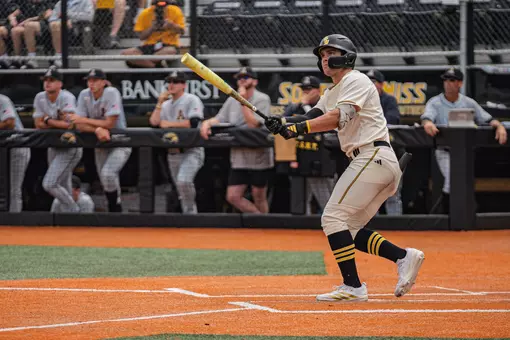
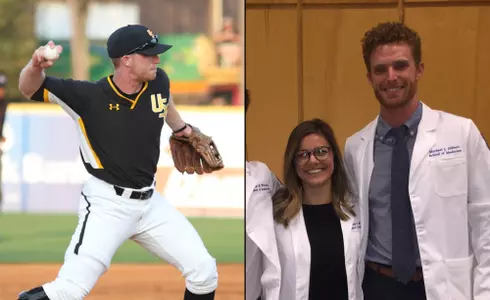
HATTIESBURG, Miss. -- Southern Miss Athletics is thankful for healthcare personnel serving on the frontlines of the COVID-19 pandemic. This serves as the fourth installment of features with former student-athletes who are in the medical field. This week's spotlight is on Michael Gilbert, a baseball letterwinner in 2014 and 2016 after transferring from Mississippi Gulf Coast CC.
Gilbert suffered an injury in October 2014 during workouts, causing him to take a redshirt amidst the lengthy rehab battle. He discussed the impact it has had on him as he continues his journey at the University of Mississippi Medical Center in Jackson.
What are you currently studying at UMMC?
"I'm in my third year of medical school. I'm just about to finish with only one week left, and then I'll be in my final year. This is the year where we make our decision going forward as to what specialty we'll go in. This time next year, I'll be a doctor. We've been in the hospital working with physicians directly with patient care. We have our own patients, and we're learning on the job rather than the first two years which are studying and pre-clinical deals."
How has the COVID-19 pandemic affected your routine?
"Since the virus started, we've had a lack of equipment, and out of safety for students, we've been out of the office and doing things online. It took a couple of weeks for the school to get that in place, so right now I'm in psychiatry. We're in an online format where we have table rounds through WebEx, which is similar to Zoom, and we have our own patients to follow and discuss treatment plans. We have afternoon sessions where we'll discuss topics and research. This is my second week of psych. I was on family medicine in Gulfport during the start of COVID-19, so I was on a six-week rotation at home while doing that. We switch around 6-8 weeks on a certain specialty like surgery and then go through all of them throughout the year. This is my last rotation of the year before starting the final one."
What is the process for medical school students as they find their specialty?
"They make you go through all the rotations to give you a broad scope of being a doctor. If you're gonna be a surgeon, you still have lots of weeks of internal medicine, OB-GYN (obstetrics and gynecology), pediatrics, and all the main stuff, regardless of if you know you want to do only one thing. Going into your fourth year, which is what I'm going into, you decide what specialty you're going to pick. I haven't completely decided what I want to do yet, but I'm thinking about OB-GYN. We still have a few more months. The virus has halted our rotations, so I'll wait until the third year. You get to see what you like and don't like by the time you get to the end of the week. Based on that, OB-GYN was one of my favorites. I didn't necessarily think it was something I would enjoy or like going into medical school. I always thought about orthopedic surgery based on my sports background, but I really enjoyed that rotation and the people in it. There are other things that I'm interested in. It's good to keep an open mind and changes week-to-week as you talk to people. It's a big decision. One thing I've noticed is that I've enjoyed them all, and some of my classmates have only liked one thing. I haven't hated any of the different sectors. OB-GYN doesn't deal with male patients necessarily, but you see a lot of different things and need a broad scope of medicine."
How will this final year of school shape out for you before May 2021 graduation?
"We'll have a match day, which is a wild process. This fall, you go on interviews for your different specialty. You'll go all over the country, and the only medical residency program here is in Jackson. Depending on who gives you an interview and based on your scores and competitiveness, you can go on up to 15-25 interviews depending on where you've applied and how many times you've done it. Then you'll put those places on a rank list. Each residency program nationally ranks their interviewees, and it's kind of an algorithm to see where you match. Then one day in March, you open an envelope and find where you'll spend the next 3-4 years."
What inspired you to pursue the medical field?
"I had a very unique story in itself (with the aforementioned offseason, pre-senior year conditioning injury). After that happened, my senior year I didn't know what I wanted to do. I focused on baseball, and that summer I played in the Cape Cod League. I was really invested in it and had some tunnel-vision in that. I did well in school and really cared about it, but didn't put much thought into my career after baseball. Through my whole year-and-a-half-long process of meeting with countless doctors, I saw how impactful they can be in a lot of people's lives in times of worry and physical ailment. I thought that was what God was leading me to in that whole process. My family has no medical background, but my older brother is a doctor. He was at UMMC when it happened. That, and my own experience, really pushed me to go to medical school."
What career plans did you have prior to the injury?
"Like every other college athlete, I wanted to play professional baseball. It was my dream as a kid and something that I feel like some teammates have a realistic understanding of how hard it is to get there. Not everyone can do it. I wasn't naive and knew it was difficult, but it's one of those things where you block it out and do whatever you can to make it. It was my goal, but I knew it's a low percentage. I really didn't put too much thought into my career. I enjoyed my time in college and took a lot of pre-requisite classes for any kind of medical professional school as a kinesiology major. If baseball didn't work out, I knew I'd do something in that realm. I tried to stay in the moment and accomplish my dream at that time."
How did you manage the balance of school and baseball and still post a 4.0 GPA?
"I feel like a lot of people in the athletics department know how difficult it is to balance the two, but it's not always easy from the outside. A lot of your friends and peers may have a few classes in the morning and hang out in the afternoons and weekends until it's time to study, but we're non-stop with baseball from the moment we step on to campus from early-morning workouts to afternoon practice. Once the season arrives, we're taking 4-5 flights a year and on long bus rides. It takes extreme focus to lock-in. Having so many gamedays, and then when your off-days are spent traveling, you don't have a lot of time to settle in. It was a trial-and-error thing I got better at as the years went by. You realize quickly that classes are larger and that you need to be self-disciplined when others may be going to restaurants and hanging with friends, especially at night. It's very tempting, but in-season you may have a night off and don't want to study, but you have to. It can be hard to separate baseball, social life and studying. I had a different experience from most of my medical school classmates. College is the best four years of your life, and it was for me, but it was different from what you have to give up. It was worth every bit to play at a highly competitive level and make some of the best friends."
How often have you been able to keep up with the Golden Eagles?
"I'm from Saucier, so I go through Hattiesburg when I go home. The first year out, I still knew lots of guys on the team and I'd come down to hang or watch a baseball or football game. Now, I don't really know anyone on the team. I'll try to go to 4-5 baseball games a year, and it's only an hour-and-a-half drive from Jackson. I'm always at the Pearl games against Ole Miss and Mississippi State. You don't even need to make it a weekend for a trip to Hattiesburg. It's hard to give up that competitiveness and be around it, but you have to put all your eggs in the medical school basket. That first year was tough not being around the sports aspect."